La cirugía abierta puede hacerse antes, después o en lugar de otros tratamientos. Si necesita cirugía, el proveedor de atención médica hablará con usted sobre sus riesgos y posibles complicaciones. Le dirán cómo prepararse. Y le comentarán sobre la anestesia, que ayudará a que no sienta dolor durante el tratamiento. La cirugía suele hacerse si el cálculo es muy grande, si ha tenido una infección grave o si el riñón sigue obstruyendo incluso después de haber esperado algún tiempo.
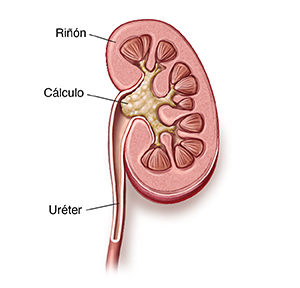
Cirugía abierta
La cirugía abierta se usa para extraer cálculos grandes o cálculos que no pueden extraerse de otro modo. Para esta cirugía, el proveedor de atención médica hace una incisión en un lateral. Le abrirá el riñón o el uréter y le quitará el cálculo. Luego, se sutura el riñón o el uréter. También le cerrará la incisión de la piel con puntos. Le dejarán un drenaje cerca de la incisión (corte) para poder sacar por allí la orina, de manera que quede lejos de la herida. En algunos casos, es posible que el médico coloque un tubo plástico temporal, llamado stent, dentro del uréter durante la cirugía. El stent ayuda a que el tejido se sane y permite que pase la orina sin problemas.
Su recuperación
Es posible que tenga que pasar varios días en el hospital. Le sacarán el drenaje que tiene en la incisión antes de irse del hospital. Si tiene un stent, el proveedor de atención médica se lo quitará dentro de 1 a 4 semanas. Necesitará entre 4 y 6 semanas de descanso en casa para recuperarse por completo. Las visitas de seguimiento y las pruebas ayudarán al proveedor de atención médica a detectar temprano cualquier cálculo nuevo. Esto puede ayudarle a evitar futuras cirugías.
Cuándo llamar al proveedor de atención médica
Llame de inmediato al proveedor de atención médica si le sucede lo siguiente:
-
Tiene dolor de repente o tiene dolor de costado que empeora cada vez más o que no puede soportar
-
Tiene fiebre de más de 100.4 °F (38 °C) o según lo que le indique el proveedor de atención médica
-
Tiene náuseas por más tiempo del indicado en las instrucciones del alta
-
Sangra mucho al orinar
-
Sangra mucho por el tubo de drenaje
-
Se hinchó o enrojeció la zona alrededor de la incisión
Cuándo llamar al 911
Llame al
-
Está aturdido o mareado
-
Tiene dolor de pecho
-
Tiene falta de aire
Featured in