Many surgeons order routine lab tests before you are admitted to the hospital or before certain outpatient procedures. The tests help find possible problems that might complicate surgery if not found and treated early. Some of the most common tests done before surgery include:
-
Chest X-rays. X-rays can help diagnose causes of shortness of breath, chest pain, cough, and certain fevers. They can also help diagnose heart and lung problems.
-
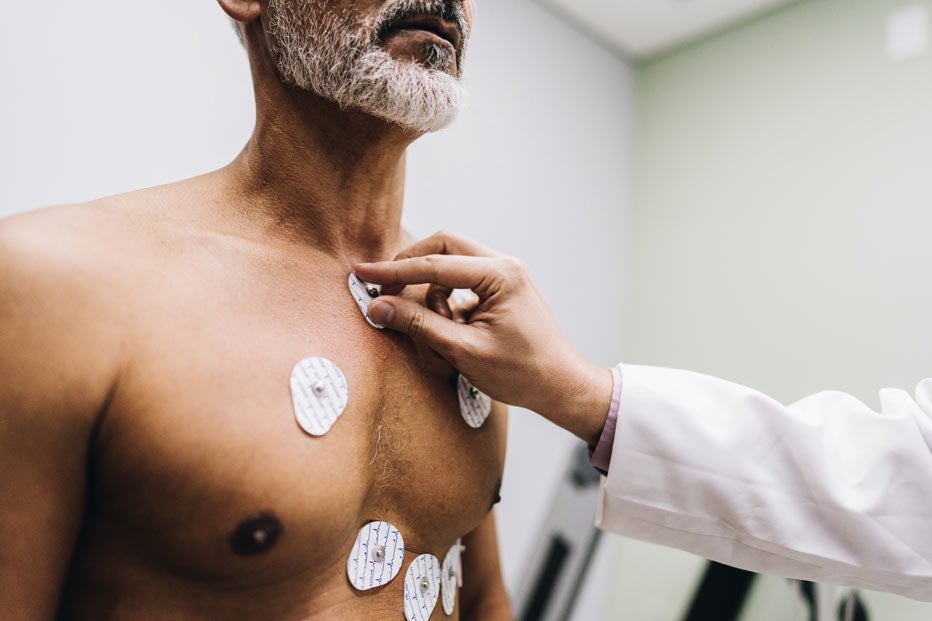
Electrocardiogram (ECG). This test records the electrical activity of the heart. It shows abnormal rhythms (arrhythmias); finds heart muscle damage; and helps find the cause of chest pain, fluttering heartbeats (palpitations), and heart murmurs.
-
Urinalysis. This test can help diagnose kidney and bladder infections and diabetes. Certain types of urinalyses can also find illegal drugs in the body.
-
White blood count. This test can help diagnose certain fevers and infections. It can also find out if you're using medicines that affect white blood counts.
-
Pregnancy testing. This test can help find out if you're pregnant. Pregnancy changes the way surgical patients are managed. So knowing this information helps keep you and your baby safe.
You may also need one or more of these blood tests before surgery:
-
Glucose. This test measures your blood sugar levels.
-
Electrolytes. This test measures the amount of potassium, sodium, and other electrolytes in your blood. These chemicals help regulate heart rhythms and other body functions.
-
Renal function studies. This test measures blood urea nitrogen (BUN) and creatinine to see how well the kidneys are functioning.
-
Complete blood count (CBC). This test checks for a low number of red blood cells (anemia), a low platelet count, and infection.
-
Coagulation studies (PT/PTT). These tests find out how well your blood clots.
Talk with your health care provider if you have questions or concerns about any of the tests you're taking.
Featured in
Online Medical Reviewer: Jonas DeMuro MD
Online Medical Reviewer: Raymond Turley Jr PA-C
Online Medical Reviewer: Tara Novick BSN MSN
Date Last Reviewed: 01/01/2025
© 2000-2026 The StayWell Company, LLC. All rights reserved. This information is not intended as a substitute for professional medical care. Always follow your healthcare professional's instructions.