Dismiss Modal

Types

Understanding Shoulder Instability

Choose a preferred language

The shoulder is the most flexible joint in the body. It allows you to throw a ball, scratch your back, and reach in almost any direction. But if your shoulder joint is injured, it may become unstable. This is called shoulder instability.


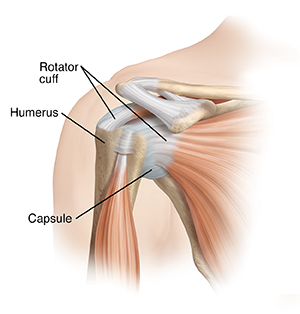
A healthy, stable shoulder

The head of the arm bone (humerus) rests in a socket (glenoid), much like a golf ball fits on a tee. Parts of the joint called stabilizers hold the humeral head and glenoid together. These include a sheet of ligaments and other tough fibers called the capsule. This encloses the humeral head and glenoid. 
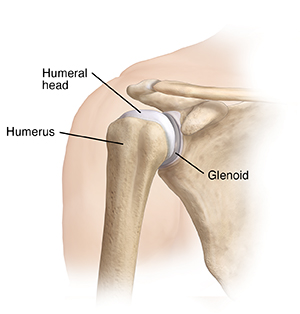
Front view of shoulder joint showing humerus, glenoid, and humeral head.Front view of shoulder joint showing rotator cuff, humerus, and capsule.


A loose, unstable shoulder

The leading cause of instability is an injury that forces the humeral head out of its socket. If the humerus pushes completely out of the socket, it’s called a dislocation. If it only pushes partially out, it’s called a subluxation. In both cases, the injury stretches or tears fibers in the capsule. It can also damage other parts of the joint. This makes the humeral head more likely to slip out of the glenoid again.


Making your shoulder stable again

Your health care provider will evaluate your shoulder. This will likely include imaging tests, such as X-rays and often an MRI. You’ll then discuss treatment choices. These can include physical therapy, surgery, or both. After the shoulder is stabilized, proper exercise can help keep it that way.


© 2000-2025 The StayWell Company, LLC. All rights reserved. This information is not intended as a substitute for professional medical care. Always follow your healthcare professional's instructions.

Find the right providers for your needs.

CalOptima Health works with thousands of Orange County providers, including doctors, specialists, health networks, medical groups and more.

Find a Doctor

See Member Health Rewards

CalOptima Health offers health rewards to eligible CalOptima Health members who take an active role in their well-being!

View available rewards
Related Articles
Read article
Orthopedics
Pinched Nerve in the Neck

Pinched nerve in the neck (cervical radiculopathy) is caused when the nerve that goes from the spinal cord to the arm is irritated or has pressure on it. This may be caused by a bulging spinal disk or a narrowing of the spinal joint because of arthritis.

Read article
Orthopedics
Tailbone (Coccyx) Fracture

Your tailbone (coccyx) is the bone at the very end of your spine. A tailbone fracture can be very painful and may take some time to heal. Read on to learn more.

Read article
Orthopedics
Sacroiliitis

Sacroiliitis is when one or both sacroiliac joints are hurt or inflamed. It can make small movements of the lower back and pelvis very painful. Learn how to care for yourself at home.

Read article
Orthopedics
Understanding a Clavicle Fracture

A fracture of the clavicle is a broken collarbone. Clavicle fractures occur most often along the middle of the bone. Depending on how badly the bone is broken, healing may take a few months or longer.