Definitions
A hammer toe has an abnormal bend in the middle joint of your toe. The toe is bent upward at joint.
Mallet toe affects the joint nearest your toenail. The toe is bent downward at joint.
Claw toe affects the joint at the ball of your foot. The toe is bent upward at joint. It also affects both toe joints. The toe is bent downward at both joints.
Hammer toe and mallet toe are most likely to occur in the toe next to your big toe.
Causes
The most common cause for all three deformities is poorly fitting shoes and tight shoes, especially high heels for women. Trauma and nerve damage from various diseases like diabetes may also cause these deformities.
Treatment
Buying shoes with more room in the toes, filing down corns and calluses, and padding, taping, or strapping the toe most often relieve the pain. Toe stretching and exercises may also be helpful. If these steps don’t work, you may need surgery to straighten your toes. If you have diabetes, talk with your healthcare provider or foot healthcare provider (podiatrist) for a foot care plan.
Shoes
Buy low-heeled shoes with plenty of room in the front. This keeps your toes from being jammed against the end of your shoe. It also keeps your shoe from rubbing the tops of your toes.
Corns and calluses
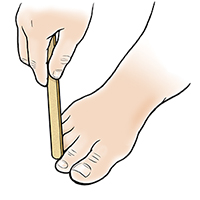
To file down a corn or callus, soak your foot in warm water. This softens the hard skin. Dry your foot. Then gently rub the corn or callus with a pumice stone or nail file.
Pads and splints
If you still have pain, you may need to put a pad or splint on your toe. This helps take pressure off the painful corn or callus.
-
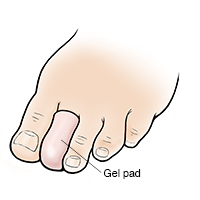
For a mallet toe, you can put a gel pad on the toe. This keeps the tip of the toe from rubbing against the bottom of the shoe.
-
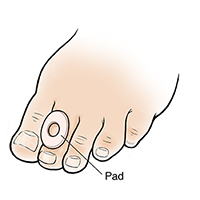
For a hammer or claw toe, you can put a felt or foam pad over the bent joint. This keeps the toe from rubbing on the top of the shoe.
-
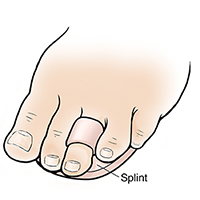
For a hammer or claw toe that is still flexible, you can put a splint on the toe. This keeps it straight so it doesn't rub on the top of the shoe.
Online Medical Reviewer: Louise Cunningham RN BSN
Online Medical Reviewer: Raymond Turley Jr PA-C
Online Medical Reviewer: Thomas N Joseph MD
Date Last Reviewed: 09/01/2025
© 2000-2026 The StayWell Company, LLC. All rights reserved. This information is not intended as a substitute for professional medical care. Always follow your healthcare professional's instructions.