Recovery

After Knee Replacement: The First Month

Choose a preferred language


You'll apply the same movement skills you learned in the hospital or rehab center to your exercise program at home. You may also keep meeting with your physical therapist. Following your exercise program brings big rewards. With your knee in shape, you'll walk more easily and get back to an active life sooner.
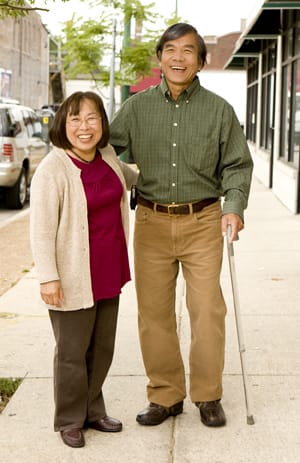
Man with cane walking on city street with woman.


Maintaining your exercise program

Exercising is the only way to get back your strength and range of motion. With continued exercise, you may gain even more strength and range of motion than you had before surgery. That's because before surgery, pain and stiffness may have limited your movement. So make exercise part of your daily routine. Keep meeting with your physical therapist as directed. They may add riding a stationary bike, swimming, or other new exercises to your program.


Walking in stride

Walking helps build a more normal, comfortable stride. It also keeps you in shape and helps prevent blood clots. Start by taking one or more short walks every day. Over time, increase how far, how long, and how many times a day you walk. After your walk, lie down, elevate your knee, and ice it to ease swelling. Your doctor or physical therapist will tell you when and where to use your walker, crutches, or cane. They will also let you know when you can stop using them.

Online Medical Reviewer: Rahul Banerjee MD

Online Medical Reviewer: Raymond Turley Jr PA-C

Online Medical Reviewer: Stacey Wojcik MBA BSN RN

Date Last Reviewed: 09/01/2025

© 2000-2026 The StayWell Company, LLC. All rights reserved. This information is not intended as a substitute for professional medical care. Always follow your healthcare professional's instructions.


Find the right providers for your needs.

CalOptima Health works with thousands of Orange County providers, including doctors, specialists, health networks, medical groups and more.

Find a Doctor

See Member Health Rewards

CalOptima Health offers health rewards to eligible CalOptima Health members who take an active role in their well-being!

View available rewards
Related Articles
Read article
Orthopedics
Discharge Instructions: Using a Walker to Sit Down and Stand Up

To use your walker, you need to learn new ways to get around. A walker can help you when you sit down and stand up.

Read article
Orthopedics
Discharge Instructions for Foot Surgery

Arrange to have an adult drive you home after surgery. If you had general anesthesia, it may take a day or more to fully recover. So, for at least the next 24 hours: Do not drive or use machinery or power tools; do not drink alcohol; and do not make any major decisions.

Read article
Orthopedics
Discharge Instructions: Using Crutches (Weight-Bearing)

Your healthcare provider has prescribed crutches for you. A healthy leg can support your body weight, but when you have an injured leg or foot, you need to keep weight off it. Once you are told that you can put some weight on your leg, use a "weight-bearing" method of walking as the leg heals.

Read article
Orthopedics
Crush Injury of the Foot, No Fracture

A crush injury to your foot causes local pain, swelling, and sometimes bruising. There are no broken bones. Learn how to care for your injury at home.