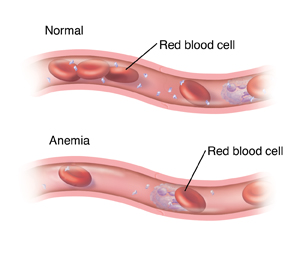
Chemotherapy can decrease the number of red blood cells in your body. When you have fewer red blood cells than normal, it's called anemia. Anemia can have many symptoms. Talk to your healthcare provider if you have any of the symptoms listed here. You may need treatment.
What is anemia?
Anemia is when your blood does not have enough red blood cells in it. Red blood cells make up 36% to 40% of normal blood. Hemoglobin is the iron-rich protein in red blood cells that carries oxygen. Hematocrit is the percentage of blood that is made up of red blood cells. If you have anemia, your red blood cell count (hemoglobin or hematocrit ) is below normal. The blood then can’t carry as much oxygen all over the body. As a result, your body can’t function as well as it should. This can lead to other problems.
Symptoms to watch for
Call your healthcare provider right away if you have any of these symptoms:
-
Trouble focusing
-
Severe tiredness (fatigue)
-
Feeling short of breath or having trouble breathing
-
Fast breathing
-
Fast heartbeat
-
Unable to get or keep an erection (impotence)
-
Feeling dizzy or lightheaded
-
Occasional chest pain
-
Headaches
-
Trouble falling or staying asleep
-
Always feeling cold
-
Pale-colored skin, nail beds, mouth, tongue, and gums
Online Medical Reviewer: Marianne Fraser MSN RN
Online Medical Reviewer: Rita Sather RN
Online Medical Reviewer: Susan K. Dempsey-Walls RN
Date Last Reviewed: 11/01/2023
© 2000-2026 The StayWell Company, LLC. All rights reserved. This information is not intended as a substitute for professional medical care. Always follow your healthcare professional's instructions.