Anesthesia is a type of medicine to prevent pain. It's often used in labor. It may numb only one region of your body. This is called regional anesthesia. Or it may let you sleep during surgery. This is called general anesthesia. Only a trained specialist gives this type of medicine. When possible, your healthcare provider will use regional anesthesia. This is so you can be awake during your baby’s birth. The type of anesthetic you have may depend on the hospital guidelines.
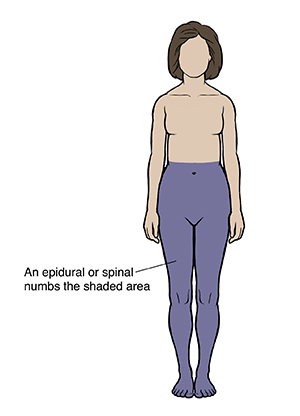
Regional anesthesia
Your healthcare provider may use regional anesthesia to numb your lower body for a vaginal or cesarean section (C-section). It does not go into your bloodstream. This means that little or none of it will reach your baby. There are 2 kinds:
-
Epidural. This is most often given while you sit up or lie on your side. A needle with a flexible tube (catheter) is put into your lower back. The needle is then removed. The anesthetic is sent through the catheter. A small pump may be attached. This gives you a constant level of anesthetic. An epidural often affects only part of your muscle control. This means you should still be able to push for a vaginal birth.
-
Spinal. This is most often given in a single dose right before delivery. Your healthcare provider may use it for a C-section. It acts fast. You may sit up or lie down when it's injected. It may affect muscle control in your lower body. This includes your ability to push.
General anesthesia
General anesthesia lets you sleep and keeps you free from pain during surgery. Itss most often used for an emergency C-section. Your healthcare provider may use it for a scheduled C-section. They may give it to you as an injection, as an inhaled gas, or as both. Delivery often happens before the medicine has reached the baby.


