Breech presentation means that your baby is in a buttocks-first or feet-first position. Babies are usually in a head-first position. A breech position can make it hard for the baby’s head to fit through the birth canal during delivery. This can cause lack of oxygen or nerve damage in your baby.
Checking for breech presentation
Your healthcare provider can tell that your baby is in a breech presentation by gently pressing on your belly. If after about 35 weeks your baby still isn’t head-first, you may have a test called an ultrasound. This test uses sound waves to form an image of your baby on a screen.
Types of breech presentations
As you get close to your due date, your baby may be in one of these breech positions:
-
Frank breech. The baby's buttocks are closest to the birth canal. The hips are flexed, and the legs are straight up in front of the body. The feet are near the baby's head.
-
Complete breech. The baby's knees are bent, and the feet and buttocks are closest to the birth canal.
-
Incomplete breech. One or both of the baby's feet are closest to the birth canal.
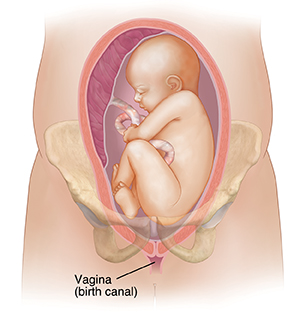
Delivering your baby
Even if the baby’s position can’t be changed, a breech baby can sometimes be born vaginally. But this is rare. Your healthcare provider will talk with you about the risks. More often, a surgical delivery (cesarean section or C-section) is done. You will have medicine to block pain (anesthesia). But you may stay awake and alert.
Once you deliver
Whether you give birth vaginally or by C-section, you and your baby will most likely be fine. Just because your baby is in a breech position doesn’t mean that they will have health problems.
Can you have a vaginal delivery?
In some cases, your healthcare provider may try to turn the baby head-down by putting pressure on your belly. This method is called an external cephalic version. If this works, you might be able to have a vaginal delivery. Your provider will talk about this with you.