Counseling can work as well as medicine for mild to moderate depression for some people. Counseling is also known as talk therapy. You work with a trained professional. They help you to better understand your thoughts and feelings. It may take time before you see and feel how much counseling is helping.
Kinds of talk therapy
Different counselors use different methods for talk therapy. All types of therapy aim to help change how you think about your problems.
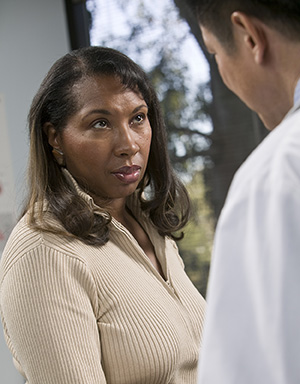
Most therapy for depression is done one-on-one. But it can be done in a group. You and your health care provider can discuss the type of therapy you think would work best for you. Your provider can also help you find a good counselor.
Look at the experience and qualifications of a counselor. Ask about their training, type of experience, license, or certification. This will show what type of counseling they can give you. It shows what problems they can address. A counselor for children may not be trained to work with an adult who has depression.
How therapy helps
Talk therapy can help you work through problems with your life and your relationships. It can help you learn how depression changes how you see things. Therapy can give you:
-
Insight about your emotions.
-
New tools for dealing with your problems.
-
Emotional support.
-
Encouragement for making progress.
-
A safety net in a crisis.
Getting better takes time
Talk therapy can help you feel better. But it may not happen right away. Depression may take away your energy and motivation. It can be hard to feel like going to therapy and sticking with it. But therapy has been proven to be helpful in treating depression. Therapy is often done for a set number of sessions, or more often. You and your therapist may decide when therapy is no longer needed.
More sources of help
It may help to talk to other people in your life as well. Keep in mind that sharing private information with a friend or in a community setting doesn't have the same protection as in a health care setting. With that in mind, you may find support and insight from:
-
A close friend or family member.
-
A clergy member trained in counseling.
-
A local support group or community group.
-
Substance Abuse and Mental Health Services Administration at www.findtreatment.samhsa.gov or 877-SAMHSA-7 (877-726-4727).
-
National Institute of Mental Health at www.nimh.nih.gov or 866-615-NIMH (866-615-6464).
Online Medical Reviewer: Paul Ballas MD
Online Medical Reviewer: Rita Sather RN
Online Medical Reviewer: Sara Mauldin FNP
Date Last Reviewed: 01/01/2025
© 2000-2026 The StayWell Company, LLC. All rights reserved. This information is not intended as a substitute for professional medical care. Always follow your healthcare professional's instructions.