Bird flu (avian influenza) is a serious illness that affects the lungs. Currently, this illness mainly infects birds. But if the germs that cause bird flu begin to spread easily among people, a worldwide outbreak could occur. No one knows if this will happen. But health experts are trying to get ready for such an event. This sheet answers some of the questions you may have about bird flu.
What are the risk factors for bird flu?
The biggest risk factor for bird flu is contact with sick birds. This is more likely to happen in parts of the world where people raise their own birds for food. Or it tends to occur in places where live birds are sold in markets.
How does bird flu spread?
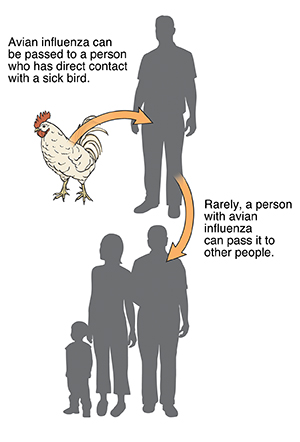
Wild birds carry the germ (virus) that causes bird flu. They then spread the virus to farm-raised birds such as chickens, ducks, and turkeys. Most people who have had bird flu have touched an infected bird or its droppings. A few people have been infected without any known contact with an infected bird. This is rare.
There are many types (strains) of bird flu. In the U.S., it has been limited to the type that caused only mild to moderate illness. But in other parts of the world, some strains have caused more severe illness, including death. Cases have mostly occurred in Asia, Africa, the Pacific, Europe, and the Near East. The CDC tracks the number of cases of bird flu in animals and humans around the world to keep track of outbreaks. The CDC watches the strains of bird flu found because changes can occur in the viruses that could make them more likely to infect humans.
What are the symptoms of bird flu?
The symptoms of bird flu are like ordinary flu. They include fever, headache, extreme tiredness (fatigue), sore throat, cough, and muscle aches. Some people get eye infections. Pneumonia and other serious problems can also occur.
Can you get bird flu from eating chicken or other birds?
Heat kills the germs that cause bird flu. You can’t get bird flu from eating poultry or eggs that are fully cooked. But before fully cooking these foods, you can be exposed to and get sick from bacteria that may be present and still alive on that food. To stay safe:
-
Wash your hands with soap and clean, running water for at least 20 seconds before and after handling raw chicken or eggs. Scrub under your fingernails and between your fingers.
-
Cook poultry until a meat thermometer registers at least 165°F (74°C) at the thickest point. Cook eggs until the whites and yolks are firm.
-
Use 1 cutting board just for poultry. Don’t let raw juices touch other foods.
-
Clean knives and cutting boards after each use with hot water and soap so they don’t contaminate other foods.
How is bird flu treated?
Scientists around the world are working to find a vaccine for bird flu. For now, health care providers often treat bird flu with antiviral medicines.
To learn more
Visit the CDC website at www.cdc.gov/flu/avianflu.
Online Medical Reviewer: Barry Zingman MD
Online Medical Reviewer: Marianne Fraser MSN RN
Online Medical Reviewer: Sabrina Felson MD
Date Last Reviewed: 01/01/2025
© 2000-2026 The StayWell Company, LLC. All rights reserved. This information is not intended as a substitute for professional medical care. Always follow your healthcare professional's instructions.