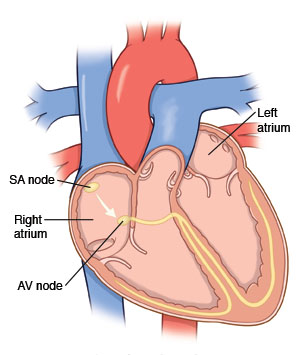
Atrial flutter is a condition in which your upper heart chambers (atria) beat very fast. It is caused by a problem in the electrical pathways of the heart muscle. It can be a sign of heart disease or other health problems that affect your heart.
Palpitations are the most common symptom of atrial flutter. This is the feeling that your heart is fluttering or beating fast or hard. When your heart beats too fast, it doesn’t pump blood very well. This can cause other symptoms. These include:
-
Anxiety.
-
Tiredness (fatigue).
-
Shortness of breath.
-
Chest pain.
-
Lightheadedness or dizziness.
-
Fainting.
Some people have no symptoms while they are in atrial flutter.
If this is the first time you’ve had atrial flutter, and you don’t have heart or lung disease, it may never happen again. But in most cases, atrial flutter comes and goes. It can last from a few hours to a couple of days or weeks. Sometimes the atrial flutter doesn’t ever go away. This is persistent atrial flutter.
Atrial flutter may be caused by heart disease. It may also be caused by other conditions that affect the heart:
-
Coronary artery disease (arteriosclerosis). This is also sometimes called blocked arteries.
-
High blood pressure.
-
Disease of the heart valves.
-
Enlarged heart.
-
Heart failure.
Atrial flutter can occur without heart disease. This may be because of:
-
Overactive thyroid (hyperthyroid).
-
Chronic lung disease (COPD, emphysema, or bronchitis).
-
Alcohol use.
-
Drugs or medicines that stimulate the heart. These include cocaine, amphetamines, diet pills, some decongestant cold medicines, and nicotine.
-
Infection.
-
Obesity.
-
Sleep apnea.
Treating or removing these causes will make it more likely that treatment for atrial flutter will work. It will also make it less likely that atrial flutter will come back.
Atrial flutter can happen along with another heart rhythm problem called atrial fibrillation. The risk for stroke is higher with these conditions. Getting treatment can reduce your risk.
Home care
Follow these guidelines when caring for yourself at home:
-
Go back to your usual activities as soon as you feel back to normal.
-
If you smoke, stop smoking. Talk with your health care provider or call a local stop-smoking program for help.
-
Don’t take drugs or medicines that stimulate your heart. These include cocaine, amphetamines, diet pills, some decongestant cold medicines, and nicotine.
-
Your provider may have prescribed medicine to stop atrial flutter from coming back. Take this medicine exactly as directed. Some medicines must be taken every day to work as they should. They aren't taken just when you have symptoms.
-
Your provider may also have prescribed blood-thinning medicine. Take this exactly as directed to lower your risk of stroke. If you are taking one such medicine, warfarin, you will need to have your blood tested regularly. This will help make sure the dose is right for you. Other blood-thinning medicines don't need regular testing.
Follow-up care
Follow up with your health care provider as advised.
When to get medical care
Contact your health care provider if:
-
You have swelling in either leg.
-
You have unexpected weight gain.
-
You are feeling lightheaded, faint, or dizzy.
Call 911
This is the fastest and safest way to get to the emergency department. The paramedics can also start treatment on the way to the hospital, if needed.
Call
-
Shortness of breath or trouble breathing
-
Passing out
-
Uncontrolled bleeding
-
A heartbeat that is very fast, slow, or irregular compared with your normal heartbeat
-
Chest pain or pressure
-
Extreme drowsiness or confusion
-
Numbness or weakness in arms, legs, or face
-
Trouble speaking or seeing
Online Medical Reviewer: Stacey Wojcik MBA BSN RN
Online Medical Reviewer: Steven Kang MD
Date Last Reviewed: 02/01/2025
© 2000-2026 The StayWell Company, LLC. All rights reserved. This information is not intended as a substitute for professional medical care. Always follow your healthcare professional's instructions.