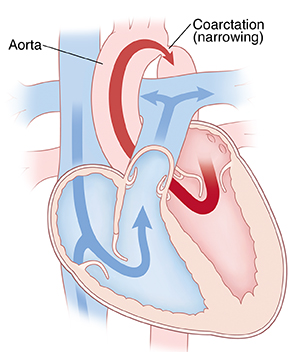
Coarctation of the aorta is an abnormal narrowing of the aorta. The aorta is the large blood vessel that leads out of the heart and sends blood to all parts of the body. Transcatheter repair is a type of procedure using a flexible tube to fix the narrowing. It can be used to treat the aorta without the need for open heart surgery. It can help to restore normal blood flow through the aorta.
Why transcatheter repair of coarctation of the aorta is done
Coarctation of the aorta can lead to very high blood pressure in the upper part of the body. Over time, this can harm the heart and cause heart failure. This makes the heart less able to pump blood out to the body. Untreated aortic coarctation can lead to severe health problems. These include coronary heart disease, stroke, and tearing in the aorta (aortic dissection).
Transcatheter repair is done as an alternative to open heart surgery. It may lead to a shorter hospital stay and faster recovery time.
How transcatheter repair of coarctation of the aorta is done
The doctor will make a small cut (incision) in a blood vessel in your groin. They will then put a long, thin wire into this blood vessel. A thin, flexible tube (catheter) will be inserted over the wire. It has a tiny deflated balloon on the end. The doctor will guide the catheter through the blood vessel all the way into the aorta. They will inflate the balloon inside the narrow part of the aorta. This will stretch the area open. A mesh tube called a stent may be left in place in the area. This will help keep the area open.
Risks of transcatheter repair of coarctation of the aorta
All procedures have risks. The risks of this procedure include:
-
Excess bleeding.
-
Infection.
-
Blood clot, which can lead to stroke, heart attack, or other problems.
-
Blockage or other complications in the large artery in the groin (femoral artery) where the incision is made.
-
A bulge in the aorta (aortic aneurysm).
-
Aortic rupture (rare).
-
Return of the coarctation and need for a repeat procedure or surgery.
Your risks may vary based on your overall health, the severity of your condition, and other factors. Ask your doctor about which risks apply most to you.
Ask your doctor if you should take antibiotics before an invasive procedure or dental cleaning. If you have a stent placed, make sure you understand the medicine you need to take to prevent blood clots, such as aspirin and other antiplatelet medicines.
You will be given instructions on activity restrictions, symptoms to report to your doctor, and follow-up appointments and tests at the time you are discharged following your procedure.
Make sure you contact your doctor if you have any questions about your procedure or recovery.
Online Medical Reviewer: Maryann Foley RN BSN
Online Medical Reviewer: Pat F Bass MD MPH
Online Medical Reviewer: Scott Aydin MD
Date Last Reviewed: 05/01/2025
© 2000-2026 The StayWell Company, LLC. All rights reserved. This information is not intended as a substitute for professional medical care. Always follow your healthcare professional's instructions.