From now on, you’ll be taking medicine to keep your heart disease (coronary artery disease) under control. You may also take medicines for related health problems. Be sure to take all your medicines as directed or they won’t work properly.
Heart medicines
Your health care provider may prescribe some of these medicines after your bypass surgery:
-
Antiplatelet medicines such as aspirin help prevent blood clots. They also reduce your risk for a heart attack.
-
Beta-blockers reduce the workload on your heart. They also lower blood pressure.
-
ACE inhibitors lower blood pressure and decrease strain on the heart.
-
Lipid-lowering medicines reduce the amount of LDL (bad) cholesterol and other fats in the blood.
Other medicines
Depending on your risk factors, you may also take medicines for related conditions:
-
If you have high blood pressure, you may take medicines such as diuretics and vasodilators. These lower blood pressure, which helps control heart disease.
-
If you have diabetes, pills or insulin injections can keep blood sugar under control. This reduces the risk for diabetes complications, including heart disease.
-
If you smoke or use other tobacco products, quit smoking to lower the risk of having a heart attack. Quitting smoking also makes you less likely to develop more blocked arteries in the heart and in other blood vessels in your body. There are medicines that can help you quit smoking. Talk with your care team to find out if taking a medicine to help you stop smoking or using other tobacco products is right for you.
Tips for taking medicines
-
Set up a routine. For example, take your medicine with the same meal each day. Or take it before you go to bed.
-
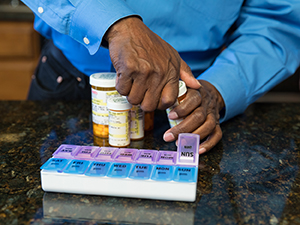
Use a pillbox or dispenser. Choose one that has the day of the week and morning and evening marked. This device may help you keep your medicines organized. It also helps remind you when to take them.
-
Keep a list of all your medicines and their dosages with you at all times. Show this list to any health care provider or dentist who treats you. Also show it to your pharmacist before buying any prescription or over-the-counter medicine.
Featured in
Online Medical Reviewer: Mary Mancini MD
Online Medical Reviewer: Ronald Karlin MD
Online Medical Reviewer: Stacey Wojcik MBA BSN RN
Date Last Reviewed: 04/01/2025
© 2000-2026 The StayWell Company, LLC. All rights reserved. This information is not intended as a substitute for professional medical care. Always follow your healthcare professional's instructions.