Neurogenic bowel is the loss of normal bowel function caused by a nerve problem in the colon. The colon is where solid waste is stored before it leaves the body. Nerve problems here can cause long-term problems with constipation, bowel control, and other issues. A spinal cord injury or a nerve disease may damage the nerves that help control the colon.
How the gastrointestinal tract works
The food you eat goes through your gastrointestinal (GI) tract for digestion. The GI tract is a long tube. Muscles around the GI tract move the food along. They do this by squeezing the tube in wavelike motions.
Food travels from the mouth down the food pipe (esophagus) to the stomach. It then goes into the intestines. The first part is the small intestine. This part of the tube absorbs nutrients from the food.
Waste products (stool) then move into the large intestine. This part of the tube is also known as the colon or large bowel. The colon absorbs excess water from the stool. The stool is stored in the rectum. This area is the last part of the GI tract. Then the stool is moved through the anus during a bowel movement (BM). A ring of sphincter muscles keeps the stool inside the rectum until you have a BM.
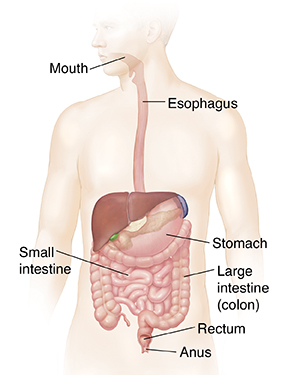
The muscles and nerves around your rectum and anus need to work together for your bowels to work normally. Nerves control the muscles of the rectum. They signal when the rectum is full. Damage to these nerves can cause problems with bowel control. The damage may reduce motion in the muscles around the colon. The damage may block signals to or from the rectum and anus. You may not feel when you need to have a BM. Or you may not be able to have a BM when you want.
Types of neurogenic bowel
There are two main kinds of neurogenic bowel:
-
Reflex bowel. With this problem, you can't control when you have a bowel movement. You may have constipation. Or you may not feel a bowel movement coming. An unplanned BM can happen when the rectum is full. Reflex bowel may be caused by an injury to or disease of the brain or upper spinal cord.
-
Flaccid bowel. With this problem, there is reduced movement in the colon. If stool builds up in the colon, stool and fluid may leak around the blockage. Flaccid bowel may be caused by injury or disease of the lower spinal cord.
What causes neurogenic bowel?
Nerve damage may lead to neurogenic bowel. This can happen from:
-
Injury to the brain or spinal cord.
-
Nerve disease, such as multiple sclerosis (MS) or amyotrophic lateral sclerosis (ALS).
-
Stroke.
Symptoms of neurogenic bowel
Neurogenic bowel may cause symptoms such as:
-
Not being able to feel when you need to have a bowel movement.
-
Trouble having a bowel movement.
-
Constipation or diarrhea.
-
Leaking of stool.
-
Sudden bowel movements without warning.
-
Upset stomach, nausea, bloating, or belly pain.
-
Loss of appetite.
Diagnosing neurogenic bowel
Your doctor will ask about your health history and symptoms. You'll have a physical exam. This may include an exam of the rectum. You may need to fill out a stool diary. This is a way to record when you have bowel movements. You may need tests such as:
-
Anorectal manometry. This test measures the strength of the anal sphincter.
-
Ultrasound scans of the anus.
-
MRI or computed tomography (CT) scans of your brain or spinal cord.
-
CT scans of the abdomen. This can check for blockages.
-
Defecography. This can check the anus, rectum, and pelvic floor muscles before, during, and after a bowel movement.
-
Electromyography. This can test the electrical activity of the muscles around the anus and rectum.
-
Colonic transit time. This test can help tell how well waste is moving through your colon.
-
Blood tests. These can check for complications like dehydration or malnutrition or for other causes of your symptoms.
-
Stool tests. These can check for other causes of your symptoms, such as cancer, infection, or parasites.
Treating neurogenic bowel
Oral medicines are often needed to move the stool through the rectum and out of the body. These may include:
-
Bowel stimulants, such as senna. These trigger the nerves and muscles in the digestive tract to speed up the movement of your bowels.
-
Fiber. Fiber acts as a bulking agent to help move the stool along.
-
Strong laxatives. These can help with constipation.
In some cases, you may need enemas or electrical nerve stimulation. Or you may have to use a gloved finger or other techniques to help stool move out of the body.
Colostomy surgery is sometimes needed when other treatments are not helping enough.
Talk with your doctor about what you can do at home to manage your neurogenic bowel. For example:
-
Fiber supplements often help. Talk with your doctor about what kind and amount to take and how often.
-
Planning your bathroom sessions and using rectal suppositories may give you a consistent time for moving your bowels.
-
Laxatives may help with constipation. Talk with your doctor about what kind and amount to take and how often.
Online Medical Reviewer: Jen Lehrer MD
Online Medical Reviewer: Raymond Kent Turley BSN MSN RN
Online Medical Reviewer: Ronald Karlin MD
Date Last Reviewed: 06/01/2025
© 2000-2026 The StayWell Company, LLC. All rights reserved. This information is not intended as a substitute for professional medical care. Always follow your healthcare professional's instructions.