Esophageal manometry is a test to measure the strength and function of the esophagus (food pipe). This test can help find causes of heartburn, swallowing problems, or chest pain. The test can also help plan surgery and decide if a past surgery was successful.
Preparing for the test
Talk with your healthcare provider about any medicines you take. Some medicines can affect the test results. Ask any questions you have about the risks of the test. These can include irritation to the nose and throat. Also ask how the test will help in your future treatment and when you'll get the results. Follow any directions you're given for not eating or drinking before the test.
During the test
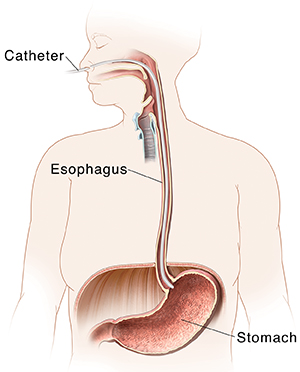
Manometry takes about an hour. Often you lie down during the test. Your nose and throat are numbed. Then a soft, thin tube (catheter) is placed through the nose and down the esophagus. At first you may notice a gagging feeling. You'll be asked to swallow several times. Holes along the tube measure the pressure while you swallow. Measurements are printed out as tracings, much like a heart test tracing. After the test, another catheter may be left in the esophagus for up to 24 hours to measure acid (pH) levels.
After esophageal manometry
You’ll likely discuss the test results with your healthcare provider at another appointment. This is because time is needed to review the tracings. You may have a mild sore throat for a short time. As soon as the numbness in your throat is gone, you can return to eating and your normal activities.
Online Medical Reviewer: Jen Lehrer MD
Online Medical Reviewer: Raymond Kent Turley BSN MSN RN
Online Medical Reviewer: Rita Sather RN
Date Last Reviewed: 04/01/2024
© 2000-2026 The StayWell Company, LLC. All rights reserved. This information is not intended as a substitute for professional medical care. Always follow your healthcare professional's instructions.