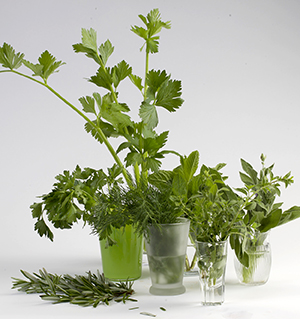
Herbs and spices add flavor to cooking without adding fat or sodium. That's why they're great for healthy cooking. Try these tips to help create tasty, healthy meals.
How much to use?
If a recipe calls for 1 tablespoon of fresh herbs, you can use one of these instead:
-
1 teaspoon of dried herbs
-
1/4 teaspoon of powdered herbs
Tips for getting the most of herbs and spices
-
Use kitchen shears or a sharp knife to cut leaves of fresh herbs. Cutting the leaves finely will release the most flavor.
-
When using whole spices, don't grind them until you need them. Crushing the berries and seeds with a mortar and pestle or grating whole nutmeg or cinnamon sticks just before adding them to your recipe will guarantee the most flavor.
-
Dried herbs pack more flavor for the same quantity than fresh herbs, and powdered herbs are more potent than dried flakes. If you are using powdered herbs in a recipe that calls for fresh, you'll want to decrease the amount you add.
-
When adding fresh or dried herbs and spices to cold recipes, such as dips or salad dressings, allow the food to sit in the refrigerator for at least a couple of hours before serving so the flavors can blend.
-
Add fresh herbs and spices to hot dishes as close to serving time as possible for the most flavorful results. Dried herbs and spices should be added early in the cooking process to prevent a powdery taste.
-
The longer dried herbs and spices sit in your cupboard without being used, the more flavor they lose. Whole spices last longer than ground or powdered spices. Store dried herbs and spices in a cool, dry, dark place. Keep powdered herbs and spices for no longer than a couple of years.
Featured in