If you feel safe and comfortable while you exercise, you are more likely to stick to your exercise program. The guidelines below can help. If you have any questions, ask your health care provider.
Make sure to contact your provider before you start any vigorous physical activity if:
-
You have an existing health problem, such as high blood pressure or diabetes.
-
You have a history of heart disease.
-
You smoke.
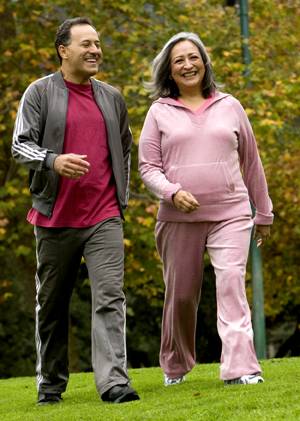
Dressing right
-
Wear loose-fitting clothes. Dress in layers on cool days. That way you can remove a layer if you get too warm.
-
Always wear shoes that fit well and that are designed for exercise. If you need orthotic inserts to prevent your feet from hurting, get them before you exercise.
-
When it’s cool outside, wear a hat to retain your body heat.
-
To protect your eyes and skin from the sun, wear a visor or hat and use sunscreen.
Exercising safely
-
Exercise indoors when it’s too hot or too cold outside, or when the air quality is poor. Try walking at a shopping mall or walking at a reasonable pace on a treadmill.
-
Drink plenty of water before, during, and after exercise (unless you are on a water-restricted diet).
-
Check your pace. You should be able to talk without being out of breath. A good test of the right speed is to see if you can sing. If you can, you may need to increase your pace.
-
If you use medicine for angina, always carry it with you.
-
Don’t exercise on days when you are ill or if you forget to take your medicines.
-
Be sure to warm up before you exercise and to cool down after. This can help improve flexibility and range of motion in your joints.
-
Be sure to talk to your health care provider before starting an exercise program.
When to call your doctor
Contact your health care provider if you:
-
Have unusual increased or new pain in a joint or muscle.
-
Have temporary palpitations or an irregular heartbeat.
Call 911
Stop exercising and call
-
Have chest pain, or if you feel dizzy, lightheaded, or severely weak.
-
Feel burning, tightness, pressure, or heaviness in your chest, neck, shoulders, back, or arms.
-
Have unusual shortness of breath.
-
Have persistent palpitations or an irregular heartbeat, especially if you also have the symptoms listed above.