Your kidneys are bean-shaped organs. They help filter extra salts, waste, and water from your body. You need to drink enough water every day to help flush the extra salts into your urine. Aim for 6 to 8 cups every day. A cup is 8 fluid ounces.
What are kidney stones?
Kidney stones are made up of chemical crystals that separate out from urine. These crystals clump together to make stones. They may stay in the kidney or move into the urinary tract.
Why kidney stones form
Kidneys form stones for many reasons. If you don’t drink enough water, for instance, you won’t have enough urine to dilute chemicals. Then the chemicals may form crystals, which can develop into stones. Here are some reasons why kidney stones form:
-
Fluid loss (dehydration). This can concentrate urine, causing stones to form.
-
Certain foods. Some foods contain large amounts of the substances that sometimes crystallize into stones. Eating foods that contain a lot of meat or salt can lead to more kidney stones.
-
Kidney infections. These infections foster stones by slowing urine flow or changing the acid balance of your urine.
-
Family history. If family members have had kidney stones, you’re more likely to have them too.
-
A lack of certain substances in your urine. Some substances can help protect you from forming stones. If you don’t have enough of these in your urine, stone formation can increase.
-
Other health conditions. Diabetes, gout, cystinuria, and other conditions may increase the risk of kidney stones.
-
Certain medicines. Calcium-based antacids, diuretics (water pills), and calcium and vitamin C supplements may increase your risk of forming stones. Do not stop taking any of these medicines unless your health care provider tells you to.
Where stones form
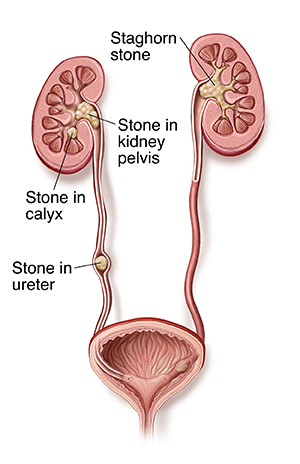
Stones begin in the cup-shaped part of the kidney (calyx). Some stay in the calyx and grow. Others move into the kidney, pelvis, or the ureter. There they can lodge, block the flow of urine, and cause pain.
Symptoms
Many stones cause sudden, severe pain and bloody urine. Others cause upset stomach (nausea). Or they can cause a frequent need to pee or trouble peeing. They may cause a burning feeling when you pee. Symptoms often depend on the stone’s size and location. Fever may be a sign of a serious infection. Call your health care provider right away if you develop a fever.