In newborns, skin color changes are often due to something happening inside the body. Some color changes are normal. Others are signs of problems. The changes described below can happen to any newborn. But skin color changes may be more obvious in babies born early (premature babies or preemies). This is because they have thinner skin than full-term babies.
Acrocyanosis
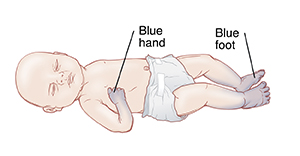
With acrocyanosis, the baby’s hands and feet are blue. This is normal right after birth. In fact, most newborns have some acrocyanosis for their first few hours of life. It happens because blood and oxygen are circulating to the most important parts of the body, such as the brain, lungs, and kidneys rather than to the hands and feet. The problem goes away as the baby's body gets used to new blood circulation patterns. Later, acrocyanosis can come back if the baby is cold (such as after a bath). This is normal and will go away by itself.
Cyanosis
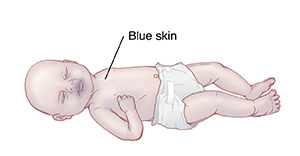
Cyanosis can be a blue color around the mouth or face, or over the whole body. It happens when the baby’s red blood cells aren't carrying as much oxygen as expected. It may mean the baby is not getting enough oxygen. Sometimes, when a newborn cries hard, their face, lips, or tongue might turn a little blue. But it should go away once they calm down. If the blue color stays, it could mean the baby isn’t getting enough oxygen, and there might be a problem with the heart or lungs. If you notice cyanosis, get medical help for your baby right away.
Mottling
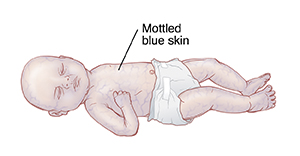
Mottling occurs when the baby’s skin looks blue or pale and blotchy. There may also be a bluish marbled or weblike pattern on the baby’s skin. The parts of the skin that are not blotchy may be very pale (this is called pallor). Mottling is not uncommon in premature or ill babies in the neonatal intensive care unit. In other babies, it could be due to a congenital heart problem, poor blood circulation, or an infection. Tell your baby's doctor right away if you notice mottling.
Jaundice
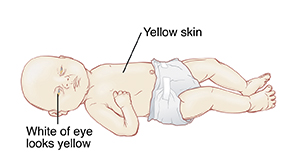
Jaundice is a yellowing of the skin and the whites of the eyes. It usually starts in the face. Then, it moves down to the chest, lower belly, and legs. It happens because the body is breaking down red blood cells (a normal process after birth). The breakdown releases a yellow substance called bilirubin. This causes the yellow color. This substance is processed by the baby’s liver. It leaves the body through the urine or stool. Jaundice occurs in about half of all babies after birth. And it usually goes away by itself. But sometimes a baby’s liver can’t process bilirubin as quickly as needed. This is especially true of babies born early (premature babies or preemies). Treatment may be needed to help the bilirubin break down and get rid of the yellow color. If your baby is jaundiced, alert their doctor.
Other skin color changes
Also tell your baby's doctor if you notice:
-
Redness around the baby’s umbilical cord or circumcision site. This could be a sign of infection.
-
Bruising.
-
Red spots (caused by broken blood vessels). This may be a sign of injury or infection. Or it could be due to a problem with the blood’s ability to clot.
Featured in