Types

Understanding Heel Pain

Choose a preferred language

Your heel is the back part of your foot. A band of tissue called the plantar fascia connects the heel bone to the bones in the ball of your foot. Nerves run from the heel up the inside of your ankle and into your leg. When you feel pain in the bottom of your heel, the plantar fascia may be inflamed. Overuse, Achilles tightness, and excess body weight can cause the tissue to tear or pull away from the bone. Sometimes the inflamed plantar fascia also irritates a nerve, causing more pain.
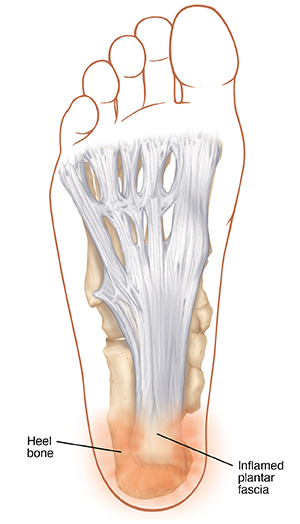
Bottom view of foot showing bones and inflamed plantar fascia.


What causes heel pain?

Wearing shoes with poor cushioning can irritate the tissue in your heel (plantar fascia). Being overweight or standing for long periods can also irritate the tissue. Running, walking, tennis, and other sports that put stress on the heels can cause tiny tears in the tissue. If your lower leg muscles are tight, this is more likely to happen. A tight Achilles tendon will also add to heel pain.


Symptoms

You may feel pain on the bottom or on the inside edge of your heel. The pain may be sharp when you get out of bed or when you stand up after sitting for a while. You may feel a dull ache in your heel after you’ve been standing for a long time on a hard surface. Running can also cause a dull ache.


Preventing future problems

To prevent future heel pain, wear shoes with well-cushioned heels. And do exercises prescribed by your doctor to stretch the Achilles tendon and the muscles in the lower leg.


© 2000-2026 The StayWell Company, LLC. All rights reserved. This information is not intended as a substitute for professional medical care. Always follow your healthcare professional's instructions.

Find the right providers for your needs.

CalOptima Health works with thousands of Orange County providers, including doctors, specialists, health networks, medical groups and more.

Find a Doctor

See Member Health Rewards

CalOptima Health offers health rewards to eligible CalOptima Health members who take an active role in their well-being!

View available rewards
Related Articles
Read article
Orthopedics
Joint Dislocation

You have a joint dislocation. This happens when a strong force is applied to the joint, tearing ligaments and forcing the bones out of place. Often no bones are broken. But the nearby nerves and blood vessels can be damaged.

Read article
Orthopedics
Understanding Bone Bruise (Bone Contusion)

A bone bruise is an injury to a bone that is less severe than a bone fracture. Bone bruises are fairly common. They can happen to people of all ages. Any type of bone in your body can get a bone bruise.

Read article
Orthopedics
Tendon Laceration

A tendon cut may be partial or complete. A complete cut of the tendon and a severe partial cut will need stitches in the tendon. Smaller cuts in the tendon do not need stitches, but the cut in the skin will need to be closed.

Read article
Orthopedics
Ankle Fracture

You have an ankle fracture. This means that one or more of the bones that make up the ankle joint are broken.