Pain felt in the front of your lower leg is often called shin splints. One common cause of this pain is tendinitis. This is the inflammation of tendons. These are the tough, cordlike bands of tissue that connect muscle to bone. When the tendons of the muscles near the shinbone (tibia) become inflamed, the pain is felt along the shin. Shin splints often affect athletes and runners and are commonly due to overuse. A less common cause is flat feet with low arches.
Symptoms of shin splints
Symptoms of shin splints often start as a dull ache that gets worse over time. Pain may also be sharp or stabbing. Resting your legs often relieves the symptoms. Pain may occur both during or after activity. Later, the pain may become continuous with almost any activity.
Your evaluation
Your healthcare provider will ask you questions about your activities and your health history. Tell your provider about possible injuries. The diagnosis is often made through the history and physical exam. There are no specific tests for shin splints. Your provider may want to do some tests to rule out other injuries, such as a stress fracture in your shinbone. These tests may include an X-ray, bone scan, or MRI scan.
Treating shin splints
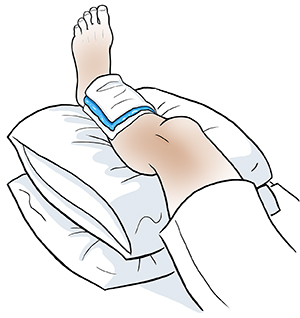
Follow these and any other instructions you are given.
-
Rest. Cut down on running and high-impact sports. Or stop doing these things completely to let your legs rest and the injury heal.
-
Ice. Put ice on the painful areas. Ice for
15 minutes a few times a day as needed. To make an ice pack, put ice cubes in a plastic bag that seals at the top. Wrap the bag in a clean, thin towel or cloth. Never put ice or an ice pack directly on the skin. -
Medicines. Take nonsteroidal anti-inflammatory drugs (NSAIDs), such as ibuprofen, as directed by your provider. If you have chronic liver or kidney disease, talk with your provider before using these medicines. Also talk with your provider if you’ve had a stomach ulcer or digestive bleeding, or are taking a blood thinner.
Preventing shin splints
To help prevent shin splints in the future:
-
Warm up before you run. Do gentle calf-stretching exercises.
-
Return to training at a lower level of intensity and build slowly.
-
Don't run on hard or uneven surfaces.
-
If you have flat feet or low arches, consider orthotics or insoles for correction.
Use running shoes with good support and cushioned soles. Replace old or worn shoes.