Posterior tibialis tendon surgery is a way to fix the tendon on the back of your calf that goes down the inside part of your ankle into the foot. The tendon can be torn or inflamed from injury or other causes. This can cause pain and other problems. Surgery can help ease these problems.
What is the posterior tibialis tendon?
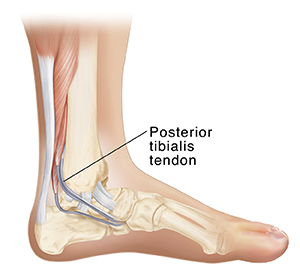
The posterior tibialis tendon is a strong cord of tissue. It's one of the most important tendons in your leg. It links the posterior tibialis muscle on the back of your calf to the bones on the inside of your foot. It helps support your foot and hold up its arch when you are walking.
An injury might tear this tendon or make it inflamed. Your tendon might also tear or get inflamed from overuse. Surgery can be done to fix this damage.
Why is posterior tibialis tendon surgery done?
A tear in the posterior tibialis tendon can happen during a fall. It can also happen if you break or dislocate your ankle. Surgery may also be done for long-term (chronic) inflammation from overuse. Or you may have problems with the tendon if you are obese or have diabetes or high blood pressure.
The arch of your foot may start to slowly fall if your tendon gets inflamed or torn. This can cause pain and swelling in your foot and ankle.
Your doctor may have your try other treatments first. These can include:
-
Resting your foot.
-
Using ice.
-
Using pain medicines.
-
Wearing a brace, orthotic, boot, or cast.
-
Getting physical therapy.
-
Using steroid injections. (This is done only in rare cases. That's because there's a risk of rupturing the tendon.)
Your doctor may recommend surgery if you still have symptoms after a few months. You may need surgery right away if your symptoms are very bad or the injury happened suddenly.
Depending on your problem, one or more types of surgery might work for you. Talk with your doctor about the risks and benefits of all your choices.
How is posterior tibialis tendon surgery done?
The surgery is done by an orthopedic surgeon. It can be done in a few ways.
-
The surgeon will make a cut (incision) through the skin and muscle of your lower calf. If you are having minimally invasive surgery, your surgeon will make one or more small cuts. The surgeon will use small tools and a tiny camera to do the surgery.
-
The surgeon will make a cut through the sheath around the tendon. They will then take out or fix parts of your damaged tendon.
-
Your surgeon may remove another tendon from your foot. This may be used to replace part or all of your posterior tibialis tendon.
What are the risks of posterior tibialis tendon surgery?
Every surgery has risks. Risks for this surgery include:
-
Too much bleeding.
-
Nerve damage.
-
Infection.
-
Blood clots.
-
Weak calf muscles.
-
Problems from anesthesia.
-
Still having pain or stiffness in your foot and ankle.
Your risks may vary by:
-
Your age.
-
The anatomy of your foot and ankle.
-
Your overall health.
-
The type of surgery you have.
You may have a higher risk for some problems if you smoke or you have brittle bones. People with diabetes may also have a higher risk of problems. Talk with your doctor about any concerns you have. You can talk about the risks that most apply to you.
Featured in