Conditioning your body before hip replacement can help speed your recovery. Daily exercise helps strengthen muscles that support the hip joint. Aerobic activity (exercise that raises your heart rate) can improve fitness. It can also help you reach or maintain a healthy weight, reducing stress on your hip.
Before beginning any exercise program, talk with your healthcare provider.
Low-impact exercise
Low-impact exercise can help improve your fitness with less stress on the hip joint. Try exercises like swimming, water aerobics, walking, or riding a stationary bicycle. It’s normal to feel a little discomfort in your hip joint. But stop any exercise that causes increasing pain. You can also ask your healthcare provider or physical therapist about ways to manage pain during exercise.
Pool exercise
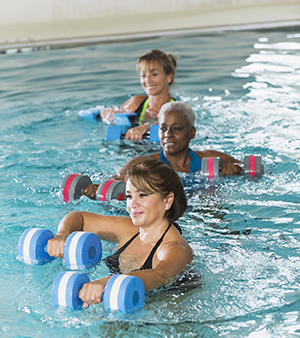
Working out in a pool is a gentle way to exercise muscles with less stress on the joints. It can also improve balance and coordination. A physical therapist may work with you in a pool therapy program. You can also try pool walking on your own. Stand in waist-deep to chest-deep water with your arms out to the sides. Then slowly walk forward. To prevent overdoing, ask your physical therapist how long to exercise. They can also give you tips on pool safety.
When to call your healthcare provider
Contact your healthcare provider if:
-
Any exercise causes increasing pain or swelling in your hip
-
You’re not sure how to safely do an exercise
-
You need help learning to use your walker or crutches