Back or neck pain may be due to problems with certain nerves near your spine. A medial branch neurotomy may help ease your pain. Neurotomy is a procedure to destroy a nerve near a problem joint. This is done to keep some messages from reaching your brain and causing symptoms, such as pain or movements you can't control. The treatment uses heat, cold, radiofrequency, or chemicals.
Before you agree to this procedure, ask the healthcare provider:
-
Why do I need this procedure?
-
Are there any other options?
-
How many times have you done this procedure?
-
What are the risks?
-
When will I see the results?
-
Will the medicines in the shot (injection) interact with other medicines I'm taking?
If you don't feel OK asking these questions, have a family member or friend ask them for you. The answers are vital to your health and safety.
The treatment may be done in a hospital. Or it may be done in an outpatient clinic. Your provider will ask you to sign a consent form. They'll examine you. They may give you an IV (intravenous) line for fluids and medicines.
Getting ready for your treatment
Ask your provider if you should stop taking any medicines before treatment. Follow any directions you're given for not eating or drinking before treatment.
Tell your provider if you:
-
Are pregnant or could be
-
Are allergic to any medicines
-
Have had any recent illness
-
Have had other recent changes in your health
During the procedure
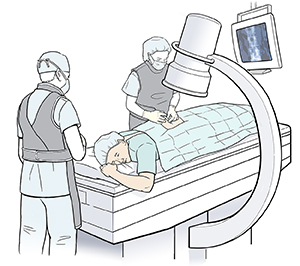
You will lie on an exam table. You'll most likely be on your stomach. Your position depends on where the nerve is that needs to be treated.
-
Your provider will clean the skin at the treatment site. Then they'll numb it with medicine.
-
Your provider will use X-ray imaging (fluoroscopy) to see your spine. The X-rays help guide the treatment. Your provider may inject a contrast dye into the affected area to help get a better image. If you're allergic to iodine or ever had a reaction to a dye, tell your provider before the procedure.
-
Your provider will use heat, cold, radiofrequency, or chemicals to destroy part of the nerve near the inflamed facet joint. Nearby nerves may also be treated.
After the procedure
You can likely go home about 1 hour after the procedure. Have a family member or friend drive you. The treated spot may be swollen. It may feel more sore than usual. This is normal. This discomfort may last for about 1 day. It may be a few days before your first symptoms get better. Your provider may prescribe pain medicines for you. Ask them when it’s OK for you to go back to work.

When to call your healthcare provider
Call your provider if you have:
-
Fever of
100.4 °F (38 °C) or higher, or as advised by your provider -
Chills
-
Redness or fluid leaking from the treatment area