Dismiss Modal

Symptoms

Kick Counts

Choose a preferred language

It’s normal to worry about your baby’s health. Generally, you will feel your baby start to move in your 2nd trimester. Often around 16 to 24 weeks. Learning the pattern of your baby's movements is one way to know what's normal for you and baby. This is called a kick count. Experts vary on how many movements you should feel within a set amount of time. Talk with your provider about how many movements you should feel.


How to count kicks
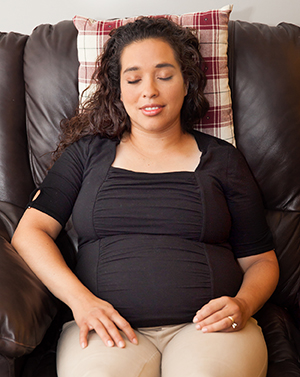
Pregnant woman relaxing in chair.

Here is just one way to do kick counts. Always follow your provider's instructions. Starting at 28 weeks, count your baby's movements daily. Time how long it takes you to feel 10 kicks, flutters, swishes, or rolls. Ideally, you want to feel at least 10 movements in 2 hours. You will likely feel 10 movements in less time than that.

Here are tips for counting kicks:

  • Choose a time when the baby is active, such as after a meal. 

  • Sit comfortably or lie on your side. 

  • The first time the baby moves, write down the time. 

  • Count until the baby has moved  10 times. This can take from 20 minutes to 2 hours. 

  • If you haven't felt 10 kicks by the end of 2 hours, call your provider for next steps.

  • Try to do it at the same time each day.


When to call your healthcare provider

Follow your provider's instructions about when to call about your baby's movements. Don't hesitate to call if you have concerns.

Call your provider  right away if:

  • Your baby moves fewer than 10 times in 2 hours.

  • Your baby moves much less often than on the days before.

  • You haven't felt your baby move all day.

© 2000-2025 The StayWell Company, LLC. All rights reserved. This information is not intended as a substitute for professional medical care. Always follow your healthcare professional's instructions.
Related Articles
Read article
OB/GYN
Pelvic Pain in Pregnancy: Unclear (2–3 Trimester)

Mild pelvic pressure or heaviness is very common in the later stages of a healthy pregnancy. This is due to the growing uterus. Although the exact cause of your pain is not certain, it doesn't seem to be dangerous. Here's what you need to know about home care.

Read article
OB/GYN
Dilation and Curettage (D and C)

Dilation and curettage or D&C is surgery to remove abnormal tissues in the uterus.

Read article
OB/GYN
Recognizing Labor

You'll start to feel strong contractions. That's when the muscles of your uterus tighten up to help push your baby out during birth.

Read article
OB/GYN
Dizziness or Fainting During Pregnancy

Feeling dizzy or faint is very common during pregnancy. It generally does not mean something is wrong. It is most common during the first trimester, but it can happen anytime during pregnancy. Dizziness and fainting (syncope) are often caused by a drop in blood pressure. This is from the hormones released during pregnancy that relax the body's blood vessels. Too little blood is then pumped up to the brain. When this happens, you lose consciousness (faint). Fainting is not dangerous to you or your baby unless you fall and hurt yourself.