Dismiss Modal

Management

Pelvic Tilt, Leg Lift for Back Pain During Pregnancy

Choose a preferred language

Before trying these exercises, talk to your healthcare provider to make sure they are safe for you. Ask your healthcare provider how many times to do each exercise.


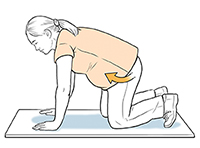
Pelvic tilt

This exercise stretches muscles in your buttocks and lower back. It also makes your stomach stronger and helps set up good posture.

  1. Get on your hands and knees with your back straight. A mat can help cushion your knees.

  2. Try to pull your stomach muscles in. Tuck in your buttocks. This will tilt your pelvis up. As your pelvis tilts, your back will rise toward the ceiling.

  3. Hold and count to 5, then relax.

Pregnant woman on all fours doing pelvic tilt exercise.


Leg lifts

This makes the muscles of your back, buttocks, and stomach stronger.

  1. Get down on your hands and knees. Put your arms directly under your shoulders. Keep your knees shoulder-width apart.

  2. Round your back. Then lift your left knee and gently bring it toward your elbow. Look at your knee as you raise it. (Stop moving your knee if you feel pressure in your stomach.)

  3. Keeping your knee slightly bent, extend your leg. Lift your leg until you feel a stretch in your low back. Don’t lift your leg higher than your hip.

  4. Hold for 5 counts, then lower your left leg. Repeat the exercise with your right leg.
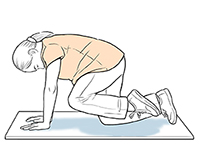
Pregnant woman on all fours doing leg lift exercise.

© 2000-2025 The StayWell Company, LLC. All rights reserved. This information is not intended as a substitute for professional medical care. Always follow your healthcare professional's instructions.
Related Articles
Read article
OB/GYN
Labor and Childbirth: Your Body Prepares

Learn about the physical changes that often signal that your baby will soon be born.

Read article
OB/GYN
How Smoking Affects Pregnancy

While you are pregnant, smoking affects your unborn child. It reduces oxygen and blood flow to your baby. This may cause bleeding problems that can put your pregnancy at risk, or even cause miscarriage or stillbirth.

Read article
OB/GYN
Asthma and Pregnancy

When you're pregnant and have an asthma flare-up, it affects both you and your baby. The baby gets oxygen from your blood to grow and develop normally. Severe asthma can cause problems getting oxygen to your baby.

Read article
OB/GYN
Adapting to Pregnancy: Third Trimester

Although common during pregnancy, some discomforts may seem worse in the final weeks. Simple lifestyle changes can help. Take care of yourself. And ask your partner to help out with small tasks.