Dismiss Modal

Management

Pelvic Tilt, Leg Lift for Back Pain During Pregnancy

Choose a preferred language

Before trying these exercises, talk to your healthcare provider to make sure they are safe for you. Ask your healthcare provider how many times to do each exercise.


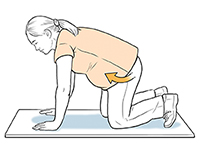
Pelvic tilt

This exercise stretches muscles in your buttocks and lower back. It also makes your stomach stronger and helps set up good posture.

  1. Get on your hands and knees with your back straight. A mat can help cushion your knees.

  2. Try to pull your stomach muscles in. Tuck in your buttocks. This will tilt your pelvis up. As your pelvis tilts, your back will rise toward the ceiling.

  3. Hold and count to 5, then relax.

Pregnant woman on all fours doing pelvic tilt exercise.


Leg lifts

This makes the muscles of your back, buttocks, and stomach stronger.

  1. Get down on your hands and knees. Put your arms directly under your shoulders. Keep your knees shoulder-width apart.

  2. Round your back. Then lift your left knee and gently bring it toward your elbow. Look at your knee as you raise it. (Stop moving your knee if you feel pressure in your stomach.)

  3. Keeping your knee slightly bent, extend your leg. Lift your leg until you feel a stretch in your low back. Don’t lift your leg higher than your hip.

  4. Hold for 5 counts, then lower your left leg. Repeat the exercise with your right leg.
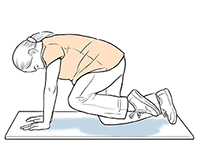
Pregnant woman on all fours doing leg lift exercise.

© 2000-2025 The StayWell Company, LLC. All rights reserved. This information is not intended as a substitute for professional medical care. Always follow your healthcare professional's instructions.


Find the right providers for your needs.

CalOptima Health works with thousands of Orange County providers, including doctors, specialists, health networks, medical groups and more.

Find a Doctor

See Member Health Rewards

CalOptima Health offers health rewards to eligible CalOptima Health members who take an active role in their well-being!

View available rewards
Related Articles
Read article
OB/GYN
Pregnancy: Body Changes

From conception (fertilization) until after the birth of your child, you and your baby will change every day. To help you understand what is happening, we've outlined how pregnancy begins and some of the changes you may notice.

Read article
OB/GYN
Comfort Tips During Pregnancy

Here are tips for first, second, and third trimesters to cope with issues like nausea, fatigue, mood swings, and headaches.

Read article
OB/GYN
Pelvic Floor Muscle Exercises

The pelvic floor muscles may weaken due to aging, pregnancy and vaginal childbirth, injury, surgery, chronic cough, or lack of exercise. If the pelvic floor is weak, your bladder and other pelvic organs may sag out of place. The urethra may also open too easily and allow urine to leak out. Kegel exercises can help you strengthen your pelvic floor muscles so they can better support the pelvic organs and control urine flow.

Read article
OB/GYN
Labor and Childbirth: Thinking About a Birth Plan

A birth plan is an outline of your wishes for your labor and birth. This plan helps your healthcare providers know what you want and expect. Work with your healthcare provider to create a plan that leaves room for the unexpected.