Dismiss Modal

Definition

For Females: Getting to Know Your Body

Choose a preferred language

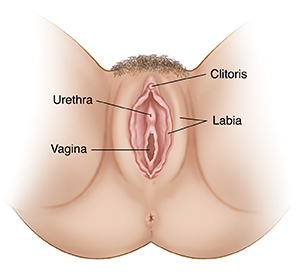
Each part of your body has its own job. You have certain parts that are protected on the inside of your body. When the time comes, they help create and support a growing baby. Other parts are on the outside. They are called genitals or private parts. You can see them with the help of a mirror. It’s a good idea to get to know your body.

  • The uterus is hollow and pear-shaped. This is where a baby grows. When your body sheds the lining of the uterus, you have a period.

  • The vagina is like a tunnel that connects the uterus with the outside of your body.

  • The cervix is the part of the uterus that connects with the vagina.

  • The two ovaries are where eggs are stored.

  • The fallopian tubes are what eggs travel through to reach the uterus.

  • The urethra is the opening where urine comes out.

  • The clitoris is a small organ that is sensitive to the touch.

  • The labia protect the vaginal opening.
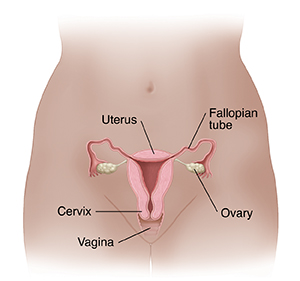
Front view of female pelvis showing cross section of uterus, ovaries, and fallopian tubes.Female external genitals.

Featured in

© 2000-2025 The StayWell Company, LLC. All rights reserved. This information is not intended as a substitute for professional medical care. Always follow your healthcare professional's instructions.

Find the right providers for your needs.

CalOptima Health works with thousands of Orange County providers, including doctors, specialists, health networks, medical groups and more.

Find a Doctor

See Member Health Rewards

CalOptima Health offers health rewards to eligible CalOptima Health members who take an active role in their well-being!

View available rewards
Related Articles
Read article
OB/GYN
About Sanitary Pads and Tampons

During your period, pads and tampons absorb the flow and protect your clothes from stains. They come in many styles. Some absorb more than others. To learn how to use them, read the package instructions and check with an adult.

Read article
OB/GYN
For Girls: Answers to Questions About Periods

When you first get your period, it's normal to be confused and wonder what's happening to you. If all your questions aren't answered here, talk with your healthcare provider, your parents, or someone else you trust.

Read article
OB/GYN
Taking Care of Yourself During Your Period

You may notice signs that your period is coming for a week or 2 before it starts. Most of these signs go away soon after each period begins. You may have some, all, or none of the signs listed below.

Read article
OB/GYN
Menstruation and Your Child: Talking About Periods

Menstruation can be a confusing and even embarrassing topic for girls and their parents to discuss. But it doesn't have to be. This sheet gives basic facts about periods. It also helps answer common questions a girl might have.