What is coronary atherectomy?
Atherectomy is a procedure that relieves symptoms of coronary artery disease by improving blood flow to your heart. It's done to remove plaque from the arteries that feed blood to the heart muscle. It's done using a small, thin tube (catheter) inserted into a blood vessel and guided to the blocked blood vessel. There, a device is used to grind or vaporize the plaque buildup to improve blood flow. It may be used instead of coronary angioplasty.
What happens during an atherectomy?
-
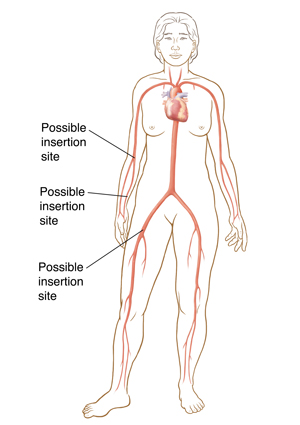
The skin at the insertion site (usually the groin, wrist, or arm) is numbed with a local anesthetic. A needle puncture is made so the catheter can be inserted.
-
A guide wire is inserted through the guiding catheter and moved to the narrow spot in your artery. Your healthcare provider tracks its movement on an angiogram,a special kind of X-ray.
-
Then, a catheter with a grinding device at the tip is positioned at the narrow spot in your coronary artery.
-
An abrasive burr at the tip of the catheter grinds the plaque into small particles that float harmlessly away in the bloodstream.
What happens after an atherectomy?
-
You will need to lie down and keep the insertion site still for a period of time. The amount of time may depend on whether a closure device, such as a stitch or collagen plug, was used to close the opening made in your artery. The time you must be still may be shorter if one of these devices was used. The amount of time will also depend on if there is any bleeding at the artery site.
-
If the insertion site was in your groin, you may need to lie down with your leg straight for several hours.
-
A nurse will check the insertion site and your blood pressure. Before going home, you may have a chest X-ray and other tests.
-
You may be able to go home the same day, or you may spend the night in the hospital after your procedure. Depending on your condition and the results of your procedure, your stay may be longer. You will get detailed instructions for your discharge and recovery period.
When to contact your doctor
Contact your provider if:
-
The insertion site has pain, swelling, severe bruising, redness, bleeding, or drainage.
-
You have new or abnormal back pain.
-
You have blood in your urine, black or tarry stools, or any other kind of bleeding.
-
You have a fever of 100.4°F (38.0°C) or higher, or as directed by your provider.
Call 911
Call 911 if:
-
You have angina (chest pain).
-
You have trouble breathing.
-
You have numbness, tingling, weakness, or any stroke-like symptoms.
-
You have severe pain, coldness, or a bluish color in the leg or arm that held the catheter.
Online Medical Reviewer: Callie Tayrien RN MSN
Online Medical Reviewer: Stacey Wojcik MBA BSN RN
Online Medical Reviewer: Steven Kang MD
Date Last Reviewed: 02/01/2025
© 2000-2026 The StayWell Company, LLC. All rights reserved. This information is not intended as a substitute for professional medical care. Always follow your healthcare professional's instructions.