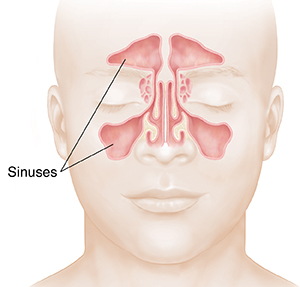
Chronic sinusitis is also known as chronic rhinosinusitis. It's often diagnosed when you've had symptoms for more than 12 weeks, even with medical treatment. The sinuses are hollow areas formed by the bones of the face. Sinuses make and drain mucus. This keeps the nasal passages clean and moist. When the sinuses become swollen (inflamed) or infected, the condition is called sinusitis. Symptoms may include:
-
Thick, discolored drainage from the nose
-
Nasal congestion
-
Pain and pressure around the eyes, nose, cheeks, or forehead
-
Headache
-
Cough
-
Thick mucus draining down the back of the throat (postnasal drainage)
-
Fever
-
Loss of smell
With chronic sinusitis, symptoms last more than 12 weeks.
Ongoing prevention
It’s important to treat the cause of a sinus problem. If you have allergies, talk with your healthcare provider about treatment. Or ask about getting an evaluation by an allergy specialist. If you’re exposed to nasal irritants, such as sawdust, use a filter mask. If you smoke, ask your provider for help with quitting. Smoke irritates the sinuses and can make your sinus problem worse. If you live with smokers, ask them to think about quitting or only smoking outdoors. If you live in an area with severe air pollution, keep track of the air quality index. Try to limit outdoor time on days with high pollution levels.
Medicine
Medicines for sinusitis may include:
-
Antibiotics. You may need to take antibiotics for a longer period. Antibiotics will treat a bacterial sinus infection. They're not used to treat viral infections.
-
Inhaled corticosteroid medicine. Nasal sprays or drops with steroids are often prescribed.
-
Other medicines. You may need to take nasal sprays with antihistamines and decongestants, or saltwater (saline) sprays or drops. Your healthcare provider may also prescribe mucolytics or expectorants to loosen and clear mucus.
-
Allergy shots (immunotherapy). If you have nasal allergies, shots may help reduce your sensitivity to allergens such as pollen, dust mites, or mold.
-
Biologic agents. These therapies may be an option if you have chronic sinusitis with nasal polyps.
If your symptoms still don't get better, you may need more testing. This may include a CT scan of the sinuses.
Surgery
If other treatments don’t solve the problem, you may need surgery. The type of surgery depends on what's causing your sinusitis. It also depends on which sinuses are involved. Your healthcare provider will tell you more about your options. The types of surgery include:
-
Endoscopic surgery. This is often used to clear blockages. The sinuses can then heal on their own. During the surgery, the provider uses a thin, lighted tube (endoscope). The tube is inserted into your nose to see into the sinuses. This surgery can be done without cuts (incisions) on the face. Sometimes a balloon device is expanded inside the sinus passageways to widen them.
-
Open surgery. This is surgery that involves accessing the sinuses through the skin. It is rarely used because of improvements with endoscopic surgery techniques. It can reach areas that an endoscope may not reach.