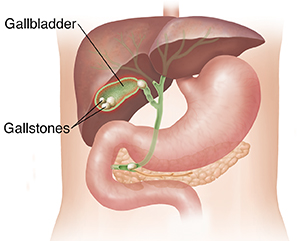
Your belly (abdominal) pain may be due to spasm of the gallbladder. This is called gallbladder or biliary colic. The gallbladder is a small sac under the liver, which stores and releases bile. Bile is a fluid that aids in the digestion of fat. Eating fatty food stimulates the gallbladder to contract, and release the bile. A gallstone may form in this sac. Although most people don't have symptoms, when the stone moves and blocks the passage of bile out of the bladder, it can cause pain and even an infection.
To be more certain of the diagnosis, you may need to have an ultrasound, CT scan, or other special test.
Many things increase the risk for developing gallstones:
-
Being female
-
Obesity
-
Being older
-
Losing or gaining weight quickly
-
High-calorie diet
-
Pregnancy
-
Hormone therapy
-
Diabetes
The most common symptoms are:
-
Abdominal pain, cramping, aching
-
Nausea, vomiting
-
Fever
Many illnesses can cause these symptoms. This pain usually starts in the upper right side of your abdomen. Sometimes it can radiate to your right shoulder, back and arm. It usually starts suddenly, becomes more intense quickly, and then gradually decreases and disappears over a couple of hours. Elderly people and diabetics may have trouble showing where the pain is exactly. The pain may occur after meals, especially a high fat meal.
Home care
-
Rest in bed and follow a clear liquid diet until feeling better. If pain or nausea medicine was given to help with your symptoms, take these as directed.
-
You can take acetaminophen or ibuprofen for pain, unless you were given a different pain medicine to use. Note: If you have chronic liver or kidney disease or ever had a stomach ulcer or gastrointestinal bleeding or are taking blood thinner medicines, talk with your provider before using these medicines.
-
Fat in your diet makes the gallbladder contract. And it may cause increased pain. So limit fat in your diet over the next 2 days. Then follow a low-fat diet after that. If you're overweight, a low-fat diet will help you lose weight. If you're not sure what to eat, ask your provider for information.
Follow-up care
If a test was already scheduled for you, keep this appointment. Be sure you know how to get ready for the test. Follow any directions you're given for not eating or drinking before the test. Schedule an appointment with your own provider after your test is done to discuss the findings. Biliary colic tends to come back. So treatment is often needed. This often includes surgery to remove the gallbladder (cholecystectomy).
When to get medical advice
Call your healthcare provider if any of these occur:
-
Pain gets worse or moves to the right lower belly
-
Repeated vomiting
-
Belly swelling
-
Pain lasts over 6 hours
-
Fever of 100.4º F (38º C) or higher, or as directed by your provider
-
Weakness, dizziness
-
Dark urine or light=colored stools
-
Yellow color of the skin or eyes (jaundice)
-
Chest, arm, back, neck or jaw pain
Call 911
Call
-
Trouble breathing
-
Very confused
-
Very drowsy or trouble waking up
-
Fainting or loss of consciousness
-
Rapid heart rate


