Diabetes is a condition where your body has trouble using sugar (glucose) for energy. This makes your blood sugar level too high. Diabetes is a lifelong (chronic) condition. It puts you at high risk for peripheral arterial disease (PAD). This is a disease of arteries in the legs. If you have PAD, arteries in other parts of your body are likely diseased, too. That puts you at high risk for other serious health problems. Read on to learn how diabetes can lead to PAD and affect your health.
How diabetes can lead to PAD
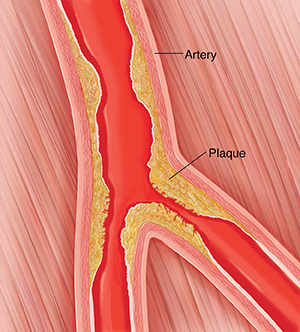
Diabetes can damage your arteries. If diabetes is not well controlled, blood sugar levels will be high. High blood sugar can make the artery walls rough. A waxy substance in the blood called plaque can then build up on the artery walls. This plaque contains cholesterol. This makes it harder for blood to flow through your arteries. This limits blood flow to your arms and legs. And this causes tissue damage. The feet are most at risk of tissue damage. If poor blood flow and tissue damage become severe, then toes, feet, or even legs may need to be removed (amputated). Blood sugar and cholesterol levels can be controlled. This is done with prescribed medicines. And also with nutrition, and exercise. Stopping smoking and losing weight may also help. Following diabetic foot care guidelines are very important for people with PAD. When needed, a surgeon can remove some of this plaque. They might even do a bypass operation.
If diabetes is not controlled
Uncontrolled diabetes can cause many complications. These include:
-
Heart disease
-
Stroke
-
Kidney damage or kidney failure (nephropathy)
-
Liver disease
-
Digestion problems
-
Nerve damage (neuropathy)
-
Eye damage (retinopathy)
-
Sexual dysfunction
-
Gum (periodontal) disease
-
Need to have a toe, foot, or leg removed (amputated) if you also have PAD
If diabetes is controlled
Controlling diabetes can lower your risk for serious health problems. These include:
-
Heart disease and stroke
-
Kidney disease
-
Eye disease
-
Nerve damage (neuropathy)
-
The need to have a toe, foot, or leg removed.