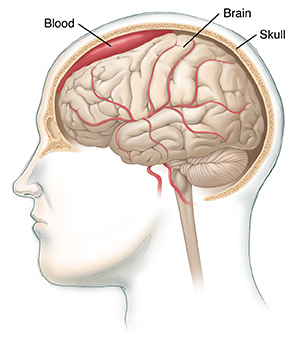
A subdural hematoma is a buildup of blood on the surface of the brain. The blood builds up in a space between the layers that surround your brain.
Your brain sits inside a bony skull. Inside your skull are several layers called the meninges. These layers cover and protect the brain. The layer just inside the skull is called the dura mater, or just dura. It's a tough, fibrous layer of tissue. On the inside of the dura is a layer called the arachnoid. When blood builds up between these layers, it can cause severe problems. A subdural hematoma is a medical emergency.
Call 911
This condition is a medical emergency. Call
What causes a subdural hematoma?
The most common cause is a head injury. This may be from a fall, a car crash, a sports injury, or violent attack. The sudden impact can strain the blood vessels inside the dura. This causes them to rip and bleed. Small arteries may break in the subdural space.
In some people, the brain shrinks. This is often from aging. The subdural space gets bigger. This can make the blood vessels more likely to break.
Another cause is taking medicine to prevent blood clots. These include warfarin, aspirin, and other blood thinners.
Rare causes include leaking of cerebrospinal fluid, a tumor, or rupture of a weak part of a blood vessel (cerebral aneurysm).
Symptoms of a subdural hematoma
It may cause symptoms right away. Or it may grow slowly and cause symptoms weeks later. Symptoms may include:
-
Headache
-
Nausea or vomiting
-
Loss of consciousness
-
Confusion
-
Dizziness
-
Balance or walking problems
-
Speech problems
-
Vision problems
-
Sleepiness
-
Weakness or numbness that may come and go
-
Seizures
Treating a subdural hematoma
The most common treatment is surgery. This helps to relieve the pressure on the brain. There are two surgeries to treat the hematoma:
-
Drilling a hole in the skull to allow the blood to drain (burr hole)
-
Cutting a flap of skull open to remove the blood (craniotomy)
If the subdural hematoma is small, your doctor may not do surgery right away. Instead, they may closely watch it. In this case, you will likely stay in the hospital. You may need:
-
Repeated CT scans to watch the hematoma
-
A sensor inserted in your head to measure your intracranial pressure
-
Medicines to control symptoms
-
To stop blood-thinner medicine
-
Vitamin K therapy to reverse the effects of some blood-thinner medicines